Preventing HLB Citrus Fruit Loss by Over 20%
A 40-hectare Brazilian commercial trial in HLB-infected Hamlin oranges compared two foliar Agrarius applications per season (500 mL/ha each, 1 L/ha annually) against untreated controls. Treated blocks lost 11.2% of fruit vs. 14% in controls (−20.3%) and showed 44.2% lower HLB symptom severity at 150 days, sustained out to 330 days.
The Problem
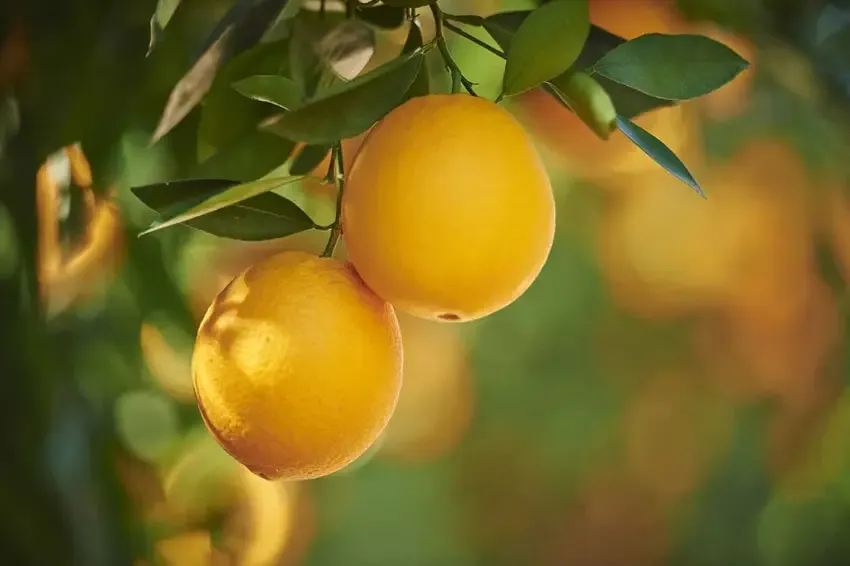
Citrus Greening (HLB) is classified by the USDA as incurable. Once the bacterium establishes in a grove, fruit develops poorly, yields fall over time, trees die earlier than they should, and the global citrus industry loses an estimated $4 billion a year to it.
For growers in Florida, Brazil, China, and other affected regions, the conventional toolkit — psyllid management and roguing — slows decline but doesn't reverse it. The question is whether anything can meaningfully reduce the year-over-year fruit loss while trees stay in the ground.
The Trial
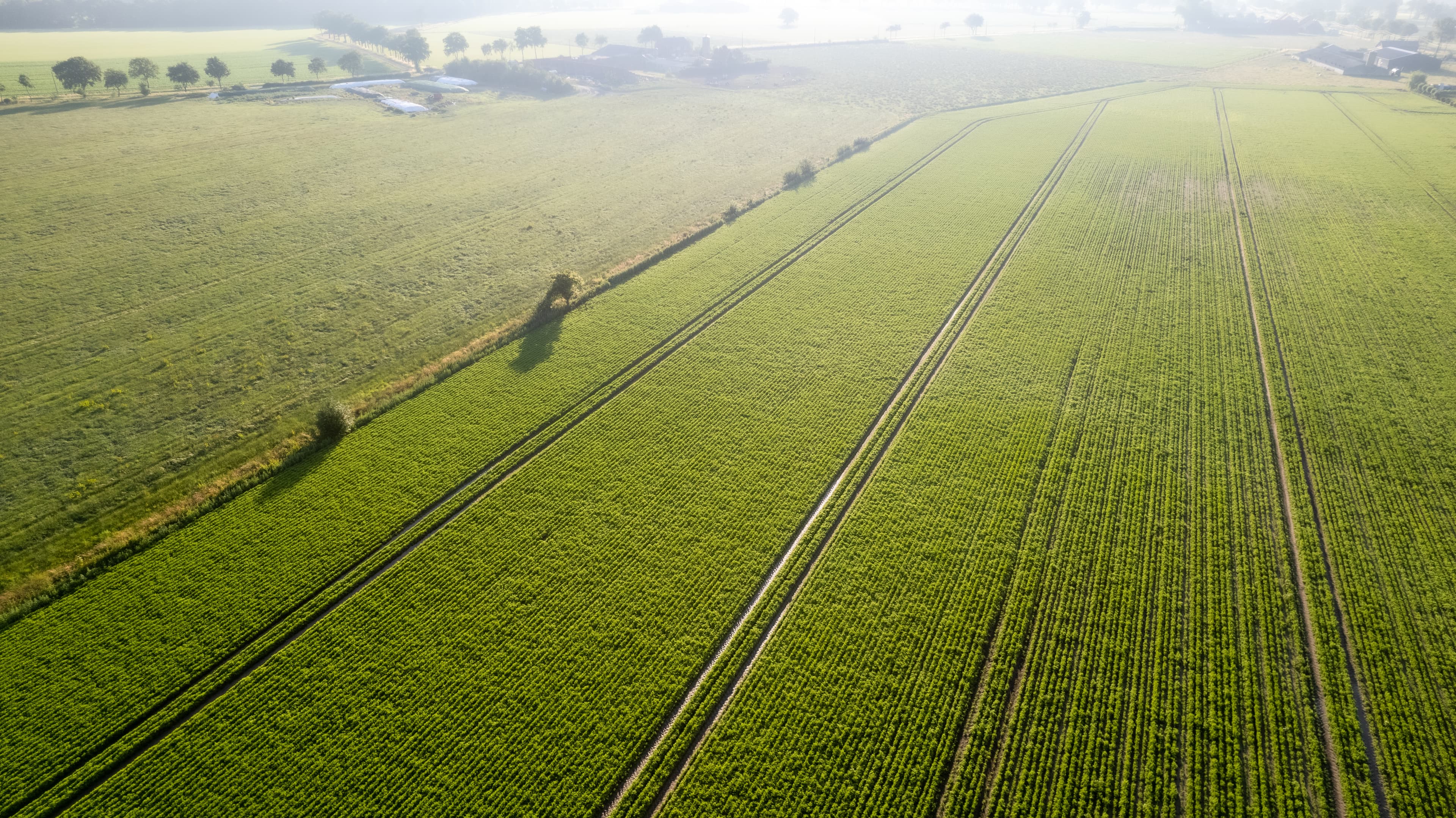
A 40-hectare commercial trial in HLB-infected Hamlin oranges (Brazil) compared two foliar Agrarius applications per season against an untreated control. Disease severity, fruit drop, and tree health were tracked across 330 days.
- Crop: Hamlin oranges, HLB-positive
- Trial scale: 40 hectares — commercial production, not research plots
- Replications: 50 per treatment
- Protocol: 500 mL/ha per application, 2 applications per season (V4 and F1 windows)
- Season investment: 1 L/ha annually
- Monitoring window: 330 days
What Happened
Treated blocks held more fruit on the tree, slowed the progression of HLB symptoms, and held those gains out to 330 days.
- Fruit loss: −20.3% vs. control (11.2% loss treated vs. 14% loss control).
- Fruit protected: an additional 0.7–0.85 t/ha on the tree.
- HLB symptom severity at 150 days: −44.2% — fewer diseased branches, healthier canopies.
- Sustained protection: treated trees still showed significantly lower severity at 330 days.
This is not a cure. It is a meaningful, repeatable reduction in the fruit and tree-vigor loss that HLB-positive groves carry every year.
Why This Matters
Every additional ton of fruit on the tree at harvest is direct revenue.
- On a typical 25–30 t/ha grove, an extra 0.7–0.85 t/ha is worth $350–425/ha at $500/ton.
- Treatment cost is well below the protected fruit value — positive ROI in season one.
- The gain recurs every season the program runs.
- Trees stay productive longer because canopy health and root function are better maintained under HLB pressure.
For an incurable disease, that's a measurable shift in the operating economics of an HLB grove.
How To Use It
The protocol layers onto the existing HLB management program rather than replacing it.
- Spray 1: at V4 (or pre-flowering window).
- Spray 2: at F1 (or fruit development window).
- Rate: 500 mL/ha per application; 1 L/ha annually.
- Equipment: standard foliar sprayer.
- Tank-mix: compatible with existing nutrient programs and psyllid / fungicide / insecticide passes.
- Use alongside: psyllid control, healthy nutrition, and standard grove management — Agrarius supports the program, it does not replace it.
The Growers Choice
Try Agrarius and experience the results for yourself, fully backed by our performance guarantee program